Why entryways take the most wear
The masonry at a building’s entrance sees more abuse than any other part of the property. Steps and landings carry constant foot traffic. Deicing salt is spread on them all winter and tracked across them. Water drips from canopies, runs off roofs, and pools on flat surfaces. Every one of those pressures works on the brick, stone, and mortar.
Retaining walls face a different load: the constant push of soil behind them, made heavier when that soil is saturated with water.
Spalling and cracked brick
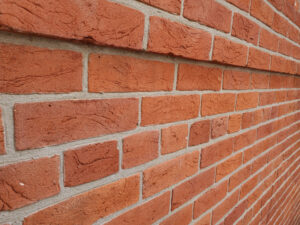
Spalling is when the face of a brick flakes, pops off, or crumbles. It usually happens when water soaks into the brick, freezes, and expands. Once the hard outer face is gone, the softer inside of the brick absorbs water even faster, so spalling tends to accelerate.
A few spalled bricks can be removed and replaced with matching units. Widespread spalling is a sign of a larger water problem, such as a missing cap, a leaking gutter, or water wicking up from the ground, which needs to be found and fixed too.
Mortar joints
Mortar is designed to be the weaker part of a masonry wall, so it wears out before the brick does. Joints that are cracked, recessed, or crumbling let water into the wall and should be repointed (often called tuckpointing). Using the right mortar matters: one that is too hard for the existing brick can cause the brick itself to crack. Our guide to tuckpointing in Chicago covers mortar, permits, and what a good quote includes.
Caps, copings, and steps
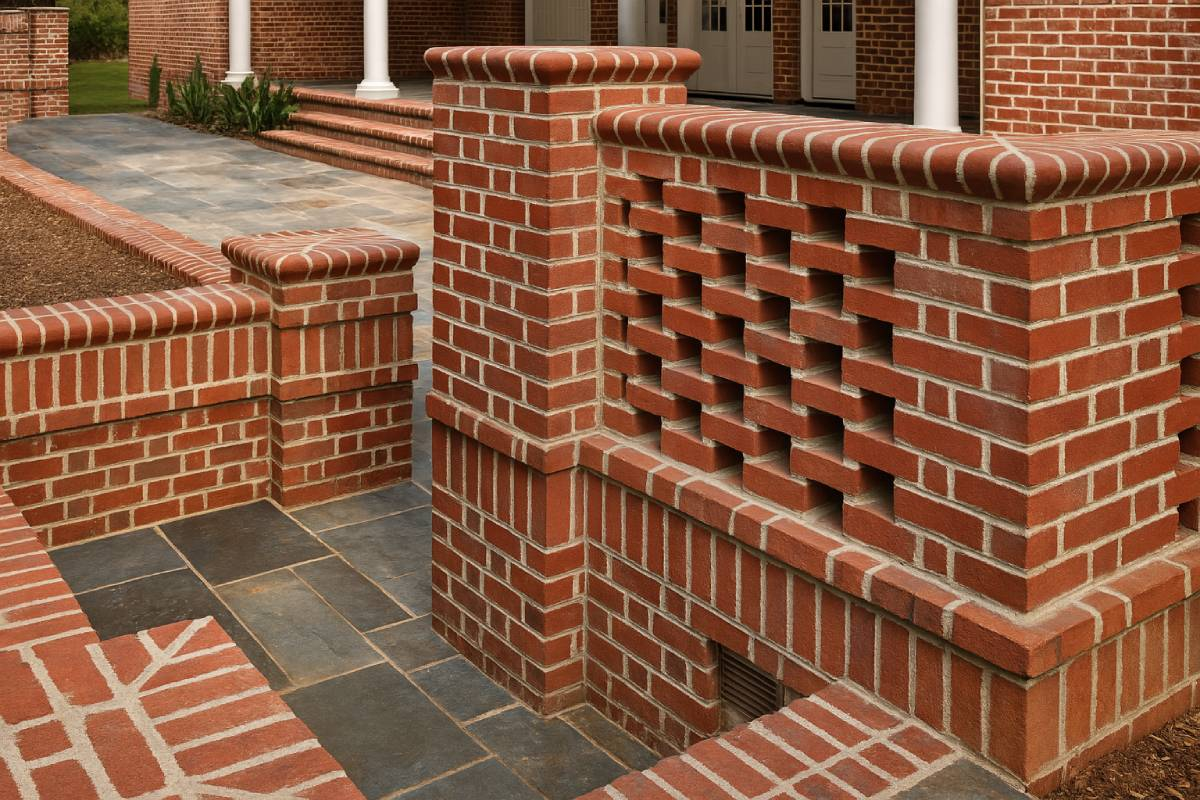
The top of a wall, called the cap or coping, keeps water out of the masonry below. When caps crack, shift, or lose their mortar bed, water pours straight into the wall. Loose caps are also a safety hazard, especially on low walls where people sit or lean.
Steps deserve the same attention. Loose treads, broken nosings, and uneven risers are trip hazards at the busiest point on the property. These are usually the first repairs to make.
Efflorescence
White, chalky deposits on brick are called efflorescence. They form when water moves through masonry and leaves dissolved salts behind on the surface. Efflorescence itself is mostly cosmetic and can often be cleaned off, but it is a clear sign that water is getting into the wall. Finding where the water comes from is the real fix.
Retaining walls
Retaining walls deserve close watching because their failures can be sudden and serious. Warning signs include:
- The wall leaning outward or bulging in the middle.
- Cracks that run through the wall, especially stepped or widening cracks.
- Soil or water seeping through joints or out the bottom.
- Pavement or ground behind the wall sinking.
- Blocked weep holes or drains.
Most retaining wall problems come from water pressure building up behind the wall. A wall that is moving should be evaluated promptly, and taller walls or walls near parking and walkways generally call for a structural engineer’s assessment before repairs are planned.
What to fix first
When the list is long and the budget is not, prioritize:
- Safety hazards: loose caps and treads, broken steps, a retaining wall that is moving.
- Water entry: failed mortar, missing caps, spalling caused by leaks, and the drainage problems behind them.
- Appearance: efflorescence, minor cosmetic spalling, staining.
Work on masonry also depends on the weather, since mortar needs suitable temperatures to cure. Plan exterior masonry repairs for the warmer months, and have problems assessed in fall so the most urgent ones can be fixed before winter. Our year-round maintenance plan shows how masonry fits into the rest of the property calendar.