Why standing water is a problem
Pavement is built to shed water, not hold it. When water sits on asphalt or concrete, it finds its way into every crack and joint. Once it reaches the base layer underneath, the base softens and loses its ability to carry weight. Traffic then pushes the surface down, cracks spread, and eventually a pothole opens.
In the Chicago area, winter makes this worse. Water that gets into pavement freezes, expands, and pries cracks wider. Each freeze and thaw cycle does a little more damage. Standing water on the surface also turns into sheets of ice on drive lanes and walkways, where people slip and vehicles lose traction.
Where water collects, and why
Most drainage problems on commercial properties come from a short list of causes:
- Low spots. Pavement settles over time, especially over soft soil or old utility trenches, and creates shallow bowls that hold water.
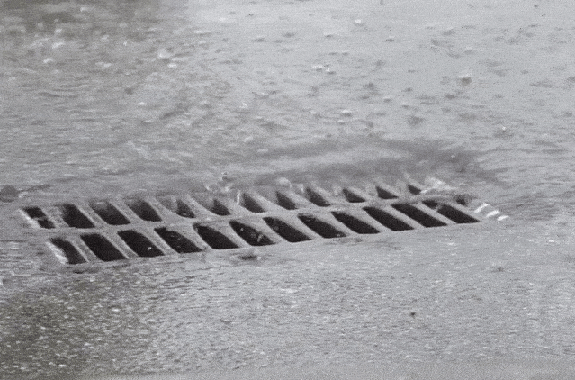
- Blocked catch basins. Leaves, sediment, and trash clog the grate or fill the basin, so water backs up around it.
- Failing catch basins. The structure itself can deteriorate, sink, or pull away from the pavement. Our guide to catch basin repair covers the warning signs.
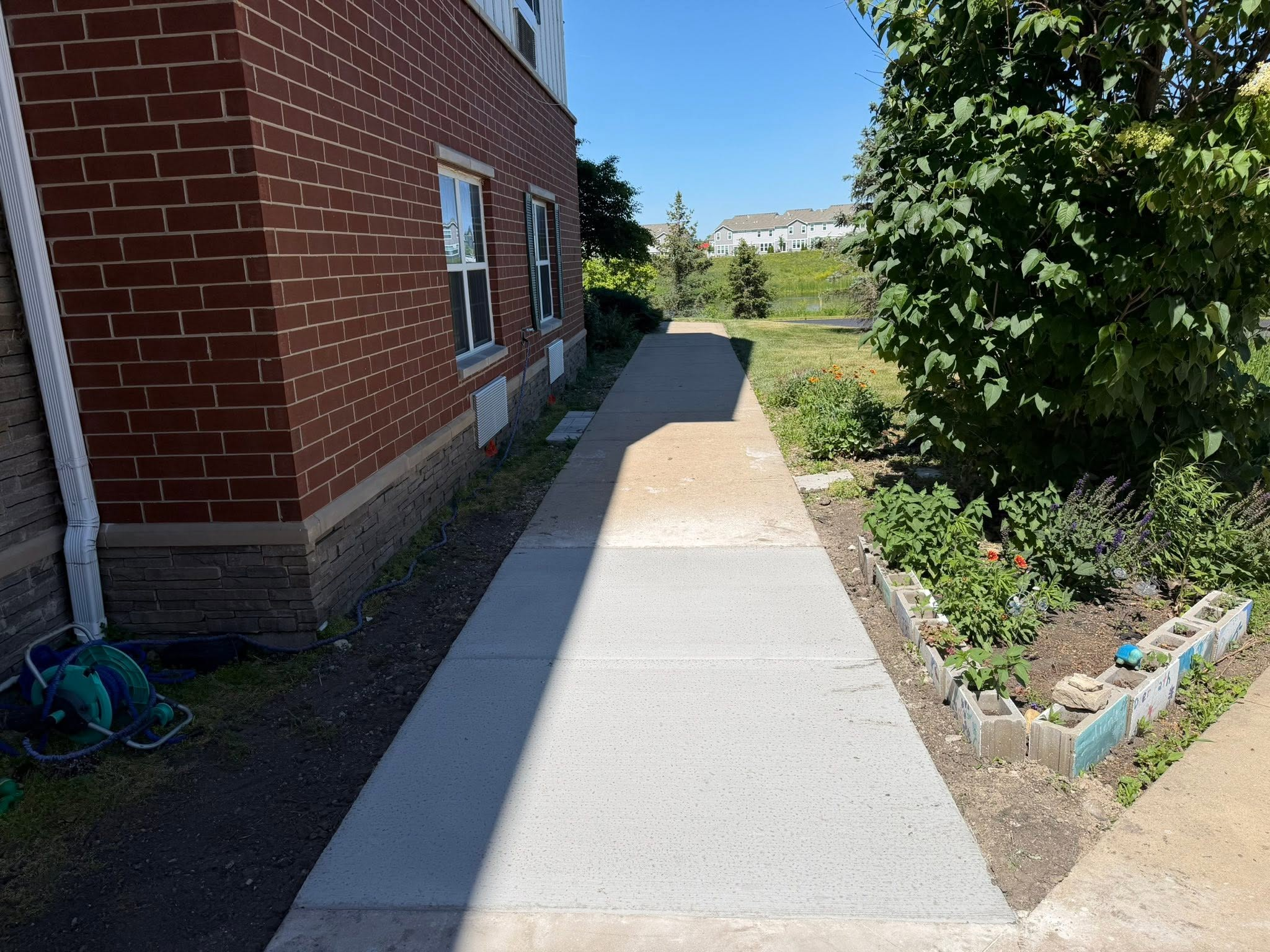
- Downspouts. Roof drains that empty onto pavement or walkways put a lot of water in one place.
- Curb lines and edges. Water that runs along a curb with nowhere to go pools at the low end.
- Grading that no longer works. Additions, overlays, and patches can change how a lot drains, sending water where it was never meant to go.
Do a rain walk
The best way to understand your drainage is to see it working. During a steady rain, or within an hour after one, walk the whole property:
- Note where water pools, how deep it gets, and how long it stays.
- Watch where water flows and whether it reaches the drains.
- Check whether catch basins are taking water or backing up.
- Look at downspouts and where their water goes.
- Take photos and mark the spots on a site plan.
A record like this makes it far easier for a contractor to scope the right fix, and it gives you a baseline to compare against after the work is done.
Common fixes
The right repair depends on the cause, but most drainage work falls into a few categories:
- Cleaning catch basins and lines, so the existing system can do its job.
- Rebuilding or resetting catch basins that have settled, cracked, or separated from the pavement around them.
- Leveling low spots, by patching or by removing and replacing the affected section with the right slope.
- Regrading larger areas, sometimes as part of a resurfacing project, so water runs to the drains.
- Redirecting downspouts, through extensions or connections to the storm system, so roof water stops pooling on walkways.
- Adding drainage such as a trench drain where water has no existing path out.
Fixing the drainage before repaving or sealcoating matters. New pavement over a drainage problem will fail the same way the old pavement did.
Fix it before the freeze
Fall is the best time to address drainage. Asphalt and concrete work needs reasonable temperatures, and every problem you fix before winter is one that will not get worse through months of freezing and thawing. Clear leaves out of catch basins late in the season, too, since fall leaves are one of the most common causes of blocked drains.
If a problem cannot be fixed before winter, plan for it. Mark the area, watch it for ice, and put it at the top of the list for spring. Our year-round maintenance plan lays out what to do each season.
Keep it working
Drainage is not a one-time fix. Build a few habits into your property routine:
- Clear catch basin grates of leaves and debris, especially in fall.
- Have basins and lines cleaned out periodically.
- Repeat the rain walk once or twice a year.
- Seal cracks before water can use them to reach the base.
A drainage system that keeps water moving protects everything else you have invested in the pavement.